Possession of a controlled substance
Simple possession turns on whether the substance was lawfully found, correctly identified by a certified laboratory, and tied to you rather than to a car, a room, or another person.

State & Federal Courts · Five Jurisdictions
A controlled substance charge is decided on what the record shows: how the stop happened, how the search happened, how the substance was identified, and what the prosecution can actually prove. Law Offices Of SRIS, P.C. has represented people facing those charges since 1997.
Intake line answered 24 hours a day, seven days a week. Consultations available in English and Spanish.
§ 01 — The Practice
Law Offices Of SRIS, P.C. represents people charged with controlled substance offenses in state and federal courts across five jurisdictions: Virginia, Maryland, the District of Columbia, New Jersey, and New York. The firm was founded in 1997 by Mr. Sris, a former prosecutor.
A single arrest can produce a possession count, a distribution count, a conspiracy count, a firearm enhancement, an immigration consequence, a driver's license consequence, and a forfeiture proceeding against a car or cash — often across two court systems at once. The firm's work begins by mapping every exposure attached to the arrest, not only the count printed at the top of the charging document.
§ 02 — Charges
Simple possession turns on whether the substance was lawfully found, correctly identified by a certified laboratory, and tied to you rather than to a car, a room, or another person.
Intent is built from circumstantial pieces — quantity, packaging, currency, scales, phone extractions, officer opinion. Each piece is separately challengeable, and opinion testimony is not automatically admitted.
Distribution cases often rest on a controlled buy or informant. Informant identity and reliability history, chain of custody for buy money, and the completeness of the recording are all discoverable.
Exposure is driven by weight thresholds and by what co-defendants say. Attribution — what quantity is properly assigned to you — is one of the most consequential fights in the case.
Federal matters run on a different clock and sentencing structure: detention hearings, grand jury practice, and advisory guideline calculations that shape outcomes long before trial.
Border, airport, and mail-interdiction matters raise search questions specific to that setting, plus parallel administrative and immigration proceedings that can move faster than the criminal case.
§ 03 — Method
Every drug prosecution has four pressure points, and the record either supports the prosecution at each one or it does not.
Was there a lawful basis to stop the vehicle or detain the person? A stop that fails at this step can carry everything found afterward with it.
Consent, plain view, search incident to arrest, automobile exception, warrant — each a separate doctrine. Warrant affidavits are reviewed line by line, including what the affiant left out.
Field tests are presumptive, not conclusive. Confirmatory analysis, analyst availability, calibration records, and chain of custody are all part of what the prosecution must produce.
Constructive possession requires more than proximity. Knowledge, dominion, and control is a question the prosecution has to answer with evidence, not inference.
Some matters resolve on a suppression motion, some on a laboratory or analyst issue, some through diversion or drug-court placement, and some are tried. The firm does not predict which of those a given case will be before the discovery is in hand.
§ 04 — The Attorneys

Founded the practice in 1997. Admitted in VA, MD, DC, NJ, and NY; appears in state and federal courts across all five.
Full profile →
Former Virginia State Trooper. Roadside investigation, field sobriety and interdiction procedure, report writing — the material that becomes the prosecution's record.
Full profile →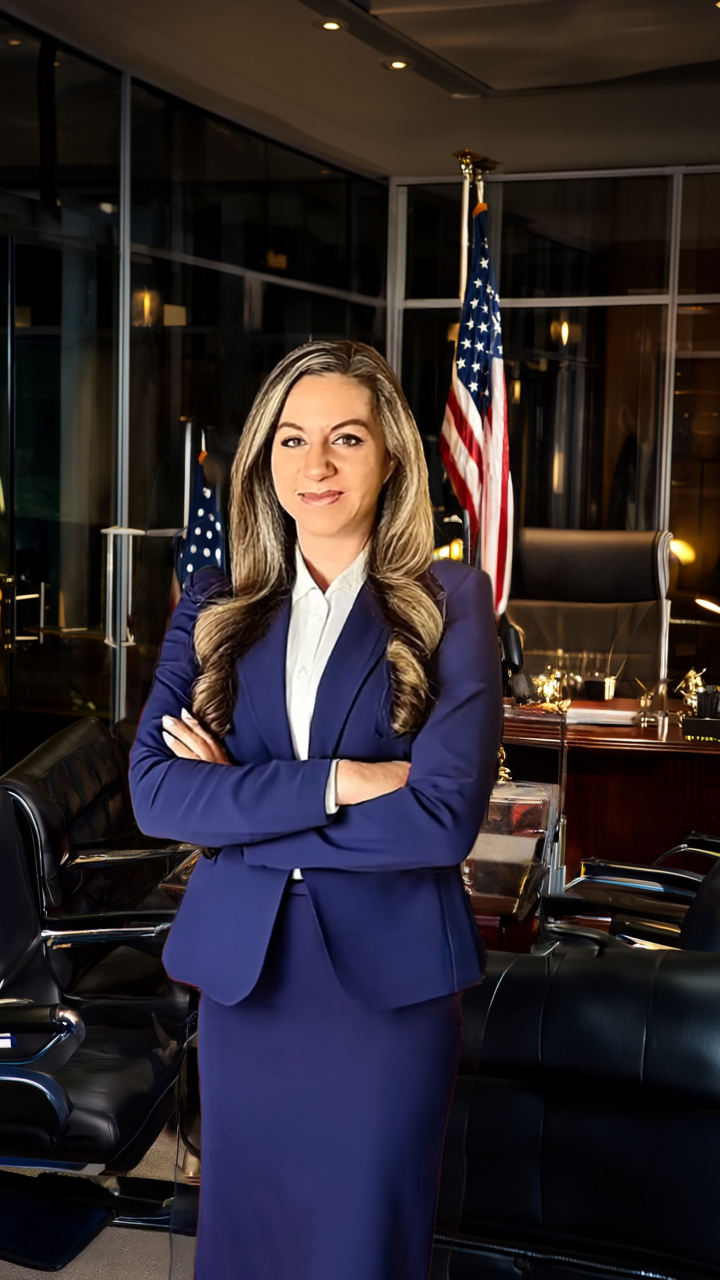
Former Maryland Assistant State's Attorney; J.D., Rutgers School of Law, 2004. Prior charging and plea evaluation work in Maryland state prosecutions.
Full profile →
J.D., The Catholic University of America, Columbus School of Law, 1994. Handles matters in D.C. Superior Court and in Virginia circuit and general district courts.
Full profile →§ 05 — Where the firm appears
The firm can arrange consultations in English and Spanish.
§ 10 — FAQ
You are not required to answer questions about the alleged offense, and statements made during or after an arrest are routinely used by the prosecution. You may state that you wish to remain silent and that you want a lawyer. Jail telephone calls and video visits are recorded and are frequently reviewed by prosecutors, so the same caution applies there.
Simple possession concerns having a controlled substance. Intent to distribute is inferred from surrounding circumstances such as quantity, packaging, currency, scales, and communications, and often from an officer's opinion testimony. Because the intent element is built from circumstantial pieces, each piece can be challenged separately, and the difference between the two charges usually changes the sentencing exposure substantially.
If a court finds that a stop, detention, or search violated the Fourth Amendment, evidence obtained as a result may be suppressed, and a case can become unprovable without it. Whether that occurs depends on the specific facts of the stop and search and on the record developed at a suppression hearing. No attorney can tell you in advance how a suppression motion will be decided.
A first offense can still carry a conviction record, incarceration exposure, driver's license consequences, immigration consequences for non-citizens, and effects on employment, housing, and financial aid. Diversion or first-offender dispositions exist in several of the jurisdictions the firm serves, but eligibility is narrow and is often waived if it is not raised at the correct stage of the case.
State misdemeanor matters commonly resolve over a period of weeks to several months. Felony matters, and matters involving laboratory analysis, forensic phone extractions, or multiple defendants, generally take longer. Federal prosecutions typically run longest of all. The court's docket, the volume of discovery, and any pretrial motions are what drive the timeline.
Controlled substance offenses are among the categories that carry the most serious immigration consequences for non-citizens, and some dispositions that look favourable in criminal court can still trigger removal or bar relief. If you are not a United States citizen, say so at the first consultation so that the immigration consequences of any plea can be evaluated before, not after, it is entered.
At an arraignment or initial appearance, the charge is stated, counsel status is addressed, conditions of release are set or reviewed, and a further date is scheduled. It is generally not the stage at which evidence is heard. Appearing with counsel already retained allows bond conditions and the discovery schedule to be addressed at that first setting rather than at a later one.
The firm handles controlled substance matters in Virginia, Maryland, the District of Columbia, New Jersey, and New York, in both state and federal courts, and maintains locations in Fairfax, Arlington, Ashburn, Richmond, and Woodstock, Virginia; Rockville, Maryland; Tinton Falls, New Jersey; and Buffalo, New York.