
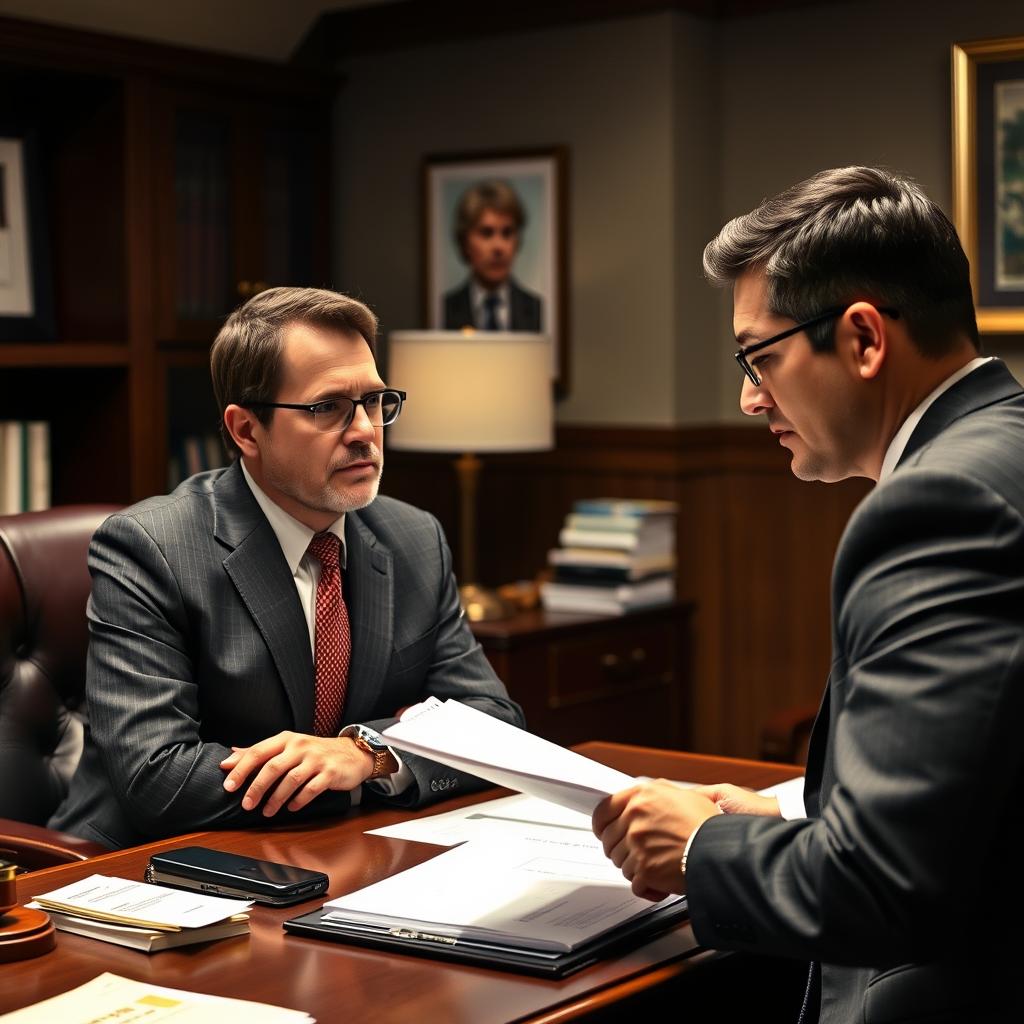
What happens at a criminal arraignment in American University Park
An arraignment is the first formal court appearance after a criminal charge. In American University Park—a residential neighborhood in Northwest Washington, D.C.—arraignments are held at the DC Superior Court, 500 Indiana Avenue NW. The proceeding serves several essential functions: a judge reads the charges, you enter a plea, the court addresses release conditions, and you are informed of your right to counsel. Because the District of Columbia operates under a unique hybrid local-federal system, the D.C. Pretrial Services Agency (PSA) conducts a risk assessment rather than a traditional cash-bail determination for most offenses. Knowing what to expect at this early stage can reduce anxiety and help you make informed decisions. If you are facing an arraignment in American University Park, legal guidance from an experienced criminal defense team can protect your rights. Law Offices Of SRIS, P.C., founded in 1997 by Mr. Sris, a former prosecutor, concentrates its practice on criminal defense, and Mr. Sris and his Of Counsel appear regularly in D.C. Courts. Reach our firm at (888) 437-7747 to request a consultation. Law Offices Of SRIS, P.C. – Advocacy Without Borders.
What to expect at a D.C. Arraignment
When you appear for arraignment at the DC Superior Court, the process moves step by step. First, the judge verifies your identity and confirms that you understand the charges. In D.C., the United States Attorney’s Office prosecutes most local crimes, so a prosecutor will be present. The judge then asks you to enter a plea—guilty, not guilty, or nolo contendere (no contest). A not-guilty plea preserves your right to contest the charges and leads to further proceedings. The court also ensures you are aware of your right to be represented by counsel; if you cannot afford a private attorney, the Public Defender Service for the District of Columbia (PDS) may be appointed. Simultaneously, release conditions are addressed. D.C. Does not use a commercial bail system for the majority of cases. Instead, the PSA conducts a pretrial risk assessment and recommends conditions—such as supervised release, stay-away orders, or periodic reporting—to the judge. The judge may adopt, modify, or reject those recommendations after hearing from both sides. The entire hearing is typically brief, but its outcome significantly shapes your case. Having an attorney present at this stage helps ensure your plea is entered properly, your release arguments are presented persuasively, and you understand the procedural roadmap ahead.
Frequently Asked Questions
What is a criminal arraignment in D.C.?
An arraignment is the first court hearing after a criminal charge, where the judge formally reads the allegations against you and you enter a plea. In the District of Columbia, the arraignment is held in the DC Superior Court and follows D.C. Law and court rules. The judge also addresses release conditions and informs you of your right to an attorney. This hearing sets the direction for your case, making it critical to have legal representation from the start.
When does an arraignment happen after an arrest in American University Park?
For most misdemeanors, the arraignment occurs within one business day after the arrest; for felonies, it follows a grand jury indictment and may be scheduled several days or weeks later. In D.C., people arrested on misdemeanors are typically brought before a judge quickly. If you are held in custody, the court prioritizes a prompt appearance. The exact timeline can vary based on the court’s calendar and the complexity of the case.
Do I need a lawyer for my arraignment?
You are not legally required to have a lawyer at the arraignment, but having one present substantially protects your rights. An experienced attorney can advise you on the appropriate plea, argue for favorable release conditions, and begin building your defense early. Even if you intend to hire private counsel later, having representation at the arraignment can prevent mistakes that may be difficult to correct.
What happens if I cannot afford an attorney?
If you cannot afford private counsel, the court will appoint the Public Defender Service for the District of Columbia (PDS) or a panel attorney to represent you. Eligibility is determined by your financial situation. You should inform the judge at the arraignment that you need court-appointed counsel. PDS attorneys are experienced in D.C. Criminal law and provide capable representation, but you also have the option to retain private counsel at any stage. Law Offices Of SRIS, P.C. offers private representation for D.C. Criminal matters.
How is release decided at a D.C. Arraignment?
D.C. Generally does not employ a cash-bail system; instead, the Pretrial Services Agency (PSA) prepares a risk assessment that guides the judge’s release decision. The PSA evaluates factors such as community ties, employment, and prior court history. Based on the assessment, the agency may recommend release on personal recognizance, supervised release, or, in rare instances, detention. The judge hears arguments from the prosecution and defense before issuing an order. An attorney can present factors that support your release under the least restrictive conditions.
What should I do before my arraignment?
Before your arraignment, gather any documents related to the charge, write down your version of events, and secure legal representation if possible. Do not discuss the facts of your case with anyone other than your attorney. Arrive at the DC Superior Court on time, dress appropriately, and be prepared to follow court directions. If you have retained counsel, notify them immediately; if not, inform the judge you need time to obtain representation.
Can charges be dropped at the arraignment?
It is uncommon for charges to be dropped entirely at the arraignment, but the prosecution may amend or reduce them in some situations. A plea of not guilty is entered and the case proceeds to the next phase. In certain misdemeanor cases, early resolution may be possible if both sides agree, but a full dismissal at the initial appearance is rare. Your attorney can assess whether any procedural grounds for dismissal exist.
What happens after I enter a plea?
After a not-guilty plea, the court schedules future dates, such as a status hearing, a pretrial conference, or a trial. For felonies, the case moves toward a preliminary hearing or grand jury review. For misdemeanors, a trial date in the Superior Court is commonly set within a few months. Both sides engage in discovery—exchanging evidence and witness lists. Your attorney will use this period to examine the prosecution’s evidence, file motions, and negotiate with the government.
What if I miss my arraignment?
Missing your arraignment can result in a bench warrant for your arrest and additional charges for failure to appear. If you cannot attend on the scheduled date, contact your attorney immediately or notify the court in advance. Courts may grant a continuance for valid reasons, but simply not appearing is taken seriously. Once a warrant is issued, you could be taken into custody and held until a new hearing.
Does Law Offices Of SRIS, P.C. represent clients at arraignments in American University Park?
Yes, Mr. Sris and his Of Counsel represent individuals at arraignments and throughout all stages of criminal proceedings in D.C. Superior Court. The firm has practiced criminal defense since 1997 and appears regularly in Washington, D.C. Courts. Mr. Sris is a former prosecutor, and his Of Counsel team includes attorneys with extensive D.C. And federal experience. For representation at your arraignment or help with an upcoming court date, contact us at (888) 437-7747.
Where are arraignments held for American University Park?
All criminal arraignments for American University Park take place at the DC Superior Court, 500 Indiana Avenue NW, Washington, D.C. 20001. The court is located at Judiciary Square and is accessible by Metro’s Red Line. The criminal division hears both misdemeanor and felony matters. If you have an upcoming arraignment, confirm the specific courtroom with the clerk’s office or your attorney.
How can I speak with an attorney about my case?
To discuss your criminal matter with an experienced defense attorney, call Law Offices Of SRIS, P.C. at (888) 437-7747 to request a consultation. A member of our team will listen to your situation, explain the arraignment process, and outline how the firm can assist you at each stage. Early involvement by counsel can make a meaningful difference in the direction of your case and the conditions of your release.
About Mr. Sris and His Of Counsel Team
Mr. Sris, Owner and Founder of Law Offices Of SRIS, P.C., is a former prosecutor who has practiced criminal defense since 1997. He is admitted in Virginia, Maryland, the District of Columbia, New Jersey, and New York. Mr. Sris testified before the Virginia House Courts of Justice Committee in support of 2019 HB 635 (chief patron Del. David Bulova). He and his Of Counsel team—experienced criminal defense attorneys who bring over 120 years of combined legal experience with 4,739+ documented firm-wide results—concentrate their practice on protecting clients’ rights in D. Results may vary.C. Courts. All attorneys appearing in this firm are Of Counsel; the firm has no associates or partners. The firm serves American University Park and all D.C. Neighborhoods from its Arlington location.
Primary D.C. Sources: D.C. Code Title 22 – Criminal Offenses · DC Superior Court · Pretrial Services Agency for the District of Columbia
Related D.C. Criminal defense resources: Washington, D.C. Criminal defense · Georgetown criminal defense attorney · Spring Valley criminal defense · Cleveland Park criminal lawyer · Chevy Chase criminal defense
Attorney advertising. Prior results do not guarantee a similar outcome.
Case results depend on a variety of factors unique to each case.