
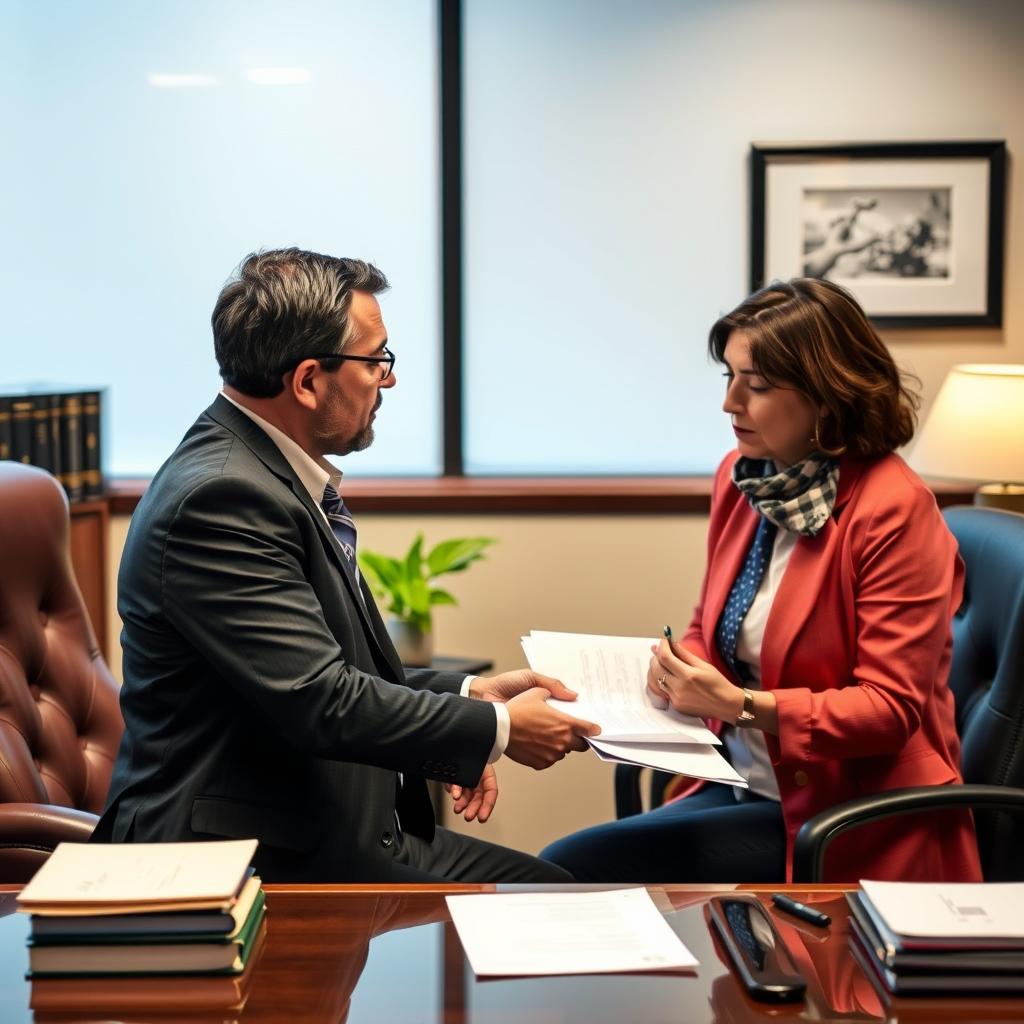
What happens at a criminal arraignment in Adams Morgan
If you have been arrested in the Adams Morgan neighborhood, your case proceeds to an arraignment at the D.C. Superior Court, located at 500 Indiana Avenue NW, Washington, DC 20001. At the arraignment, the judge formally tells you the charges that the United States Attorney’s Office for the District of Columbia has filed against you, advises you of your rights, and asks how you plead — guilty, not guilty, or, in some circumstances, nolo contendere. The court also addresses release conditions: the Pretrial Services Agency, a federal agency, conducts a risk assessment and recommends whether you should be released on personal recognizance or under supervision, because the District generally does not use a traditional cash-bail system. Whether you face a misdemeanor or a felony, the decisions made at arraignment can affect the rest of your case. Contact Law Offices Of SRIS, P.C. at (888) 437-7747 to speak with an experienced attorney before your court date. Law Offices Of SRIS, P.C. – Advocacy Without Borders.
Understanding the Arraignment Process in Adams Morgan
Adams Morgan is a vibrant, densely populated neighborhood in Northwest Washington, D.C., with a mix of residential streets, restaurants, and nightlife. Arrests in the area — whether for disorderly conduct, drug possession, assault, theft, or more serious offenses — are handled by the Metropolitan Police Department (MPD) and then prosecuted in the D.C. Superior Court’s Criminal Division. Because the District of Columbia is a federal territory, local criminal cases are prosecuted not by a district attorney but by the United States Attorney’s Office for the District of Columbia, which applies the D.C. Code. This unique hybrid structure means that an arraignment in D.C. Follows procedures that blend federal and local practice, and having counsel who is familiar with the D.C. Superior Court is a significant advantage for anyone facing charges.
After an arrest, a person is typically brought before a judicial officer for a first appearance, and the arraignment usually follows shortly thereafter. The arraignment itself is not a trial; it is the formal starting point of the criminal case. The court reads the charges, ensures that the accused understands the nature of the allegations, and confirms that the accused has legal representation or, if indigent, has applied for or received counsel from the Public Defender Service for D.C. The judge then asks the accused to enter a plea. If the plea is not guilty, the court sets a schedule for future proceedings, including status hearings and, ultimately, a trial date. For misdemeanors, the timeline from arraignment to trial is typically shorter; for felonies, the case may first go to a grand jury for an indictment before the trial date is set. During this process, the court also revisits release conditions based on the Pretrial Services Agency’s updated assessment and any arguments from counsel.
Frequently Asked Questions
What is an arraignment in D.C. Superior Court?
An arraignment is a court hearing where the judge officially informs you of the criminal charges filed against you and asks you to enter a plea. In D.C. Superior Court, the arraignment takes place after arrest and initial presentment. The judge will read the charges, verify that you understand them, and confirm whether you have an attorney. You will then be asked to plead guilty, not guilty, or nolo contendere. The judge also reviews your release status based on the Pretrial Services Agency’s risk assessment and may set conditions of release. If you do not have an attorney, the court will address your eligibility for appointed counsel.
What should I do before my arraignment in Adams Morgan?
You should retain experienced criminal defense counsel immediately and refrain from discussing your case with anyone other than your lawyer. Before the arraignment, you and your attorney can review the charging document, evaluate potential defenses, and prepare for the plea that will be entered. You should also cooperate with the Pretrial Services Agency interview so the court has accurate information for its release decision. Gather any documents that may be relevant, such as character letters, employment records, or proof of community ties, because these can be presented at the arraignment to support a request for release on personal recognizance or with minimal conditions.
Can I be released at my arraignment?
Yes, most people arrested in D.C. Are released before trial, often at or shortly after the arraignment. The D.C. Code favors release on personal recognizance or with non-financial conditions unless the government demonstrates that no condition or combination of conditions will reasonably assure the safety of the community and the defendant’s return to court. The Pretrial Services Agency makes a recommendation to the court, and the judge then decides conditions. In many misdemeanor cases, release is granted at the first appearance. Even in felony cases, release with supervision, electronic monitoring, or a stay-away order is common.
What happens if I plead not guilty at the arraignment?
If you plead not guilty, the case moves forward into the pretrial phase, and the court will schedule a status hearing and a trial date. In D.C. Superior Court, a not-guilty plea triggers the government’s obligation to turn over discovery — police reports, witness statements, forensic reports, and any exculpatory evidence. Your attorney will use this period to investigate, file motions if necessary (such as motions to suppress evidence), and negotiate with the prosecutor. For felonies, the case may be presented to a grand jury for indictment; if an indictment is returned, the case continues in the Felony Division. Throughout this period, your release conditions may be modified.
Do I need a lawyer for an arraignment in Adams Morgan?
While you are not legally required to have a lawyer at the arraignment, representing yourself is never advisable. The prosecutor will be present, and the judge will expect you to respond to the charges and to address release conditions. An experienced criminal defense attorney understands the D.C. Code, the Pretrial Services Agency process, and the local practices of the D.C. Superior Court. A lawyer can argue for the most favorable release conditions, advise you on the appropriate plea, and begin building your defense from the earliest stage. Law Offices Of SRIS, P.C. Appears regularly in the D.C. Superior Court, including on behalf of clients from the Adams Morgan area.
What are the possible pleas at a D.C. Arraignment?
You may plead guilty, not guilty, or, in limited circumstances with the court’s permission, nolo contendere (no contest). A guilty plea results in immediate sentencing, though the judge must first ensure the plea is knowing and voluntary. A not-guilty plea sets the case for trial. A nolo contendere plea has the same effect as a guilty plea for purposes of that case but cannot be used against you in a related civil lawsuit. In practice, the vast majority of defendants plead not guilty at the arraignment so that their attorney can review the evidence and seek the trusted resolution, which may include a negotiated plea later.
What if I miss my arraignment date?
If you fail to appear at your arraignment, the judge may issue a bench warrant for your arrest. A missed arraignment can also lead to the government filing an additional charge for failure to appear. If you realize you have an upcoming court date and cannot attend, you should contact your lawyer immediately. Your attorney can file a motion to recall the warrant and seek to have the case placed back on the court’s calendar. The court will consider the reason for the missed appearance and whether you voluntarily came forward. Prompt action is critical to minimize potential consequences.
Is the arraignment the same as a trial?
No, an arraignment is a preliminary hearing, not a trial. No evidence is presented, no witnesses are called, and no determination of guilt or innocence is made. The only purposes of the arraignment are to inform you of the charges, take your plea, and address release conditions. A trial date is set only after the arraignment, following pretrial motions and discovery. Understanding this distinction helps remove some of the anxiety that often accompanies an arrest, but it does not diminish the importance of having counsel with you at this first critical stage.
Where is the D.C. Superior Court located?
The D.C. Superior Court Criminal Division is located at 500 Indiana Avenue NW, Washington, DC 20001, near the Judiciary Square Metro station on the Red Line. The courthouse serves the entire District of Columbia, including all neighborhoods such as Adams Morgan, Dupont Circle, Capitol Hill, and beyond. Our Arlington location, at 1655 Fort Myer Dr, Suite 700, Room 719, Arlington, VA 22209, is approximately 4.5 miles from the courthouse and serves clients throughout the Washington, D.C. Metropolitan area. Contact Law Offices Of SRIS, P.C. at (888) 437-7747 for a consultation before your court appearance.
How long does a criminal case take after arraignment in D.C.?
The length of a criminal case varies depending on whether it is a misdemeanor or a felony and on the complexity of the issues involved. Misdemeanor cases may reach trial within a few months; felony cases often take longer because they involve grand jury proceedings, more extensive discovery, and motions practice. The D.C. Superior Court’s calendar, the availability of witnesses, and the need for possible competency evaluations can also affect the schedule. Throughout the case, your attorney can give you a clearer sense of timing based on the specific charges and the posture of your matter.
What role does the Pretrial Services Agency play at arraignment?
The Pretrial Services Agency (PSA) is a federal agency that conducts a risk assessment and makes a release recommendation to the judge at or before the arraignment. PSA interviews defendants, verifies background information, and uses a validated risk-assessment tool to predict the likelihood of re-arrest and failure to appear. The agency’s report goes to both the court and the prosecutor. The judge relies heavily on this assessment in deciding release conditions. Having counsel who can present additional information — such as strong community ties, employment, and lack of prior record — can complement PSA’s findings and support a more favorable release decision.
Can my attorney speak for me at the arraignment?
In most circumstances, your attorney can address the court on your behalf regarding release conditions and procedural matters, but the plea must come from you personally. An experienced criminal defense lawyer will handle the substantive advocacy: arguing for release, requesting that conditions be tailored to your circumstances, and addressing any issues with the charging document. The judge will also ask the attorney to confirm representation and discuss scheduling. The plea itself, however, must be entered by the defendant directly in open court, to ensure that the plea is voluntary and understood.
About Mr. Sris and His Of Counsel Team
Law Offices Of SRIS, P.C. Concentrates its practice on criminal defense, family law, and immigration matters across five jurisdictions. Mr. Sris, Owner and Founder, is a former prosecutor who founded the firm in 1997. He is admitted in Virginia, Maryland, the District of Columbia, New Jersey, and New York. Mr. Sris testified before the Virginia House Courts of Justice Committee in support of 2019 HB 635 (chief patron Del. David Bulova). For clients in Adams Morgan and throughout Washington, D.C., Mr. Sris and his Of Counsel team bring extensive experience in the D.C. Superior Court. Mr. Sris and his Of Counsel bring over 120 years of combined legal experience and have achieved 4,739+ documented firm-wide results. Results may vary.
Attorney advertising. Prior results do not guarantee a similar outcome. Results may vary.
Case results depend on a variety of factors unique to each case.