
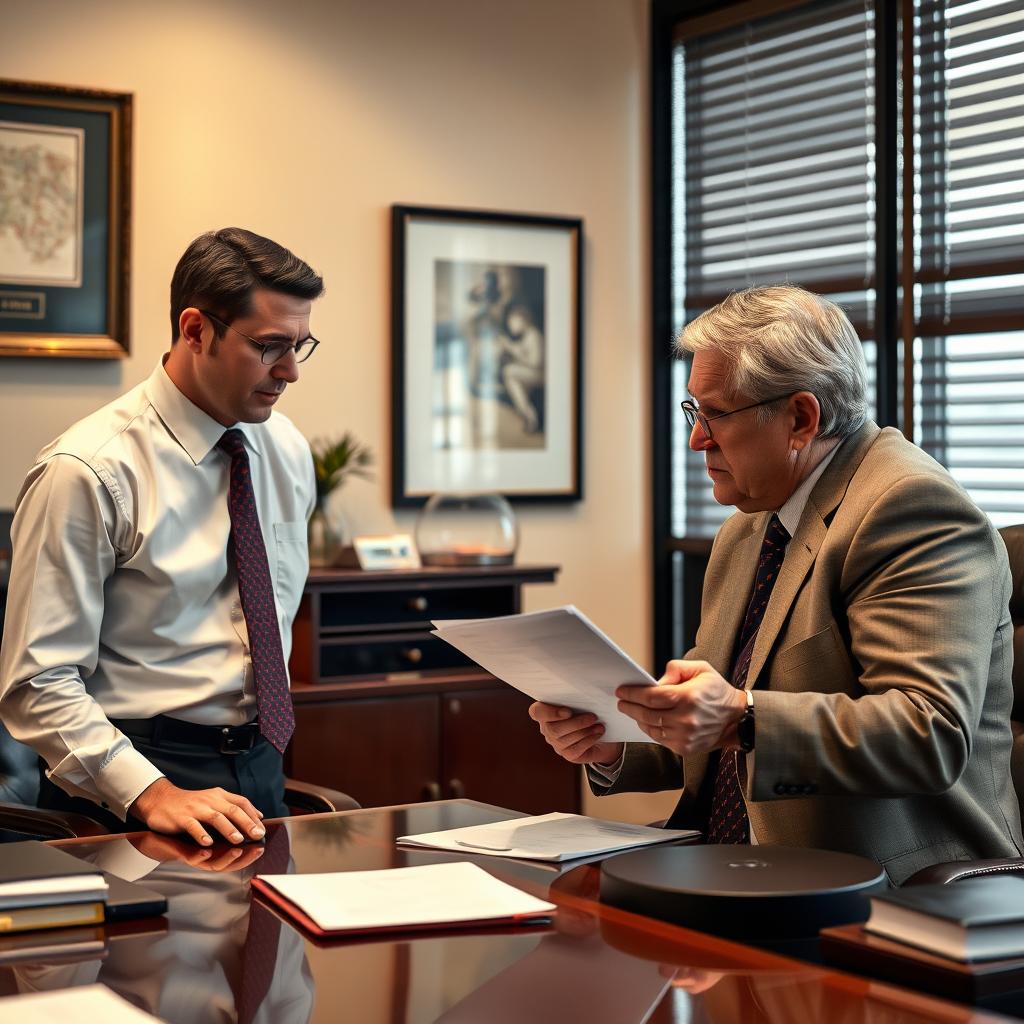
What happens at a criminal arraignment in Foggy Bottom
An arraignment is the first formal court appearance after an arrest in Washington, D.C. If you are arrested in the Foggy Bottom neighborhood and charged with a criminal offense under D.C. Law, your arraignment will be held at the D.C. Superior Court, Criminal Division, located at 500 Indiana Avenue NW. During this hearing, the judge will inform you of the specific charges, you will enter a plea, and the court will address the conditions of your release. Because the United States Attorney’s Office for the District of Columbia prosecutes local crimes in D.C., the government is represented by a federal prosecutor. The arraignment is not a trial, but the steps taken at this early stage can significantly shape the rest of your case. Having experienced defense counsel present at the arraignment can help you understand the charges and the options available. Law Offices Of SRIS, P.C. serves clients in Foggy Bottom and throughout the District from our Arlington location; reach the firm at (888) 437-7747 to discuss your situation.
The Arraignment Process in Washington, D.C.
In the District of Columbia, a criminal case begins with an arrest by the Metropolitan Police Department or another law enforcement agency. Following the arrest, a person may be held until the arraignment, which occurs in the Criminal Division of the D.C. Superior Court. For misdemeanor offenses, the arraignment often takes place within 24 hours after the arrest; for more serious felony charges, the process may take longer while the prosecutor presents the case to a grand jury for indictment. At the arraignment hearing, the judge will read the charges and ask the defendant to enter a plea of guilty, not guilty, or nolo contendere. A not-guilty plea is the most common initial plea because it preserves the right to challenge the prosecution’s case and to negotiate a possible resolution later.
Another critical function of the arraignment is the determination of pretrial release. D.C. Does not use a traditional cash-bail system for most offenses. Instead, the Pretrial Services Agency, a federal agency, conducts a risk assessment and makes a recommendation to the court about release conditions. The judge may release a defendant on personal recognizance, impose supervision conditions, or, in limited circumstances involving serious charges or flight risk, order detention pending trial. Understanding how the PSA risk assessment works and presenting a complete picture of the defendant’s ties to the community, employment, and family can influence the release decision. An attorney can help present this information effectively at the arraignment.
Frequently Asked Questions About Arraignments in Foggy Bottom
What happens if I plead not guilty at my arraignment in D.C.?
If you plead not guilty, the court will schedule further proceedings, including a status hearing or trial date, and your attorney will have the opportunity to review the evidence, file motions, and prepare a defense. In D.C. Superior Court, a not-guilty plea at the arraignment is not a final decision; it keeps all options open. For misdemeanors, trial is typically set within a few months. In felony cases, a preliminary hearing or grand jury review may occur first. Throughout this time, your lawyer can negotiate with the prosecutor about a possible plea agreement or reduced charges. The arraignment’s not-guilty plea is a procedural step that leads to the defense investigation phase.
Can I be released from custody at the arraignment?
Yes, in most D.C. Misdemeanor cases, a person is released on personal recognizance or with non-financial supervision conditions at the arraignment, because D.C. Does not rely on cash bail for the majority of offenses. The Pretrial Services Agency provides the judge with a risk assessment and a recommendation. The judge then decides whether to release the defendant and under what conditions, such as reporting to a pretrial services officer, staying away from certain locations, or complying with drug testing. For serious felonies or when the prosecution demonstrates a flight risk or danger to the community, the court may order preventive detention. Having an attorney present at the arraignment to argue for the least restrictive release conditions is a crucial part of the defense.
Do I need a lawyer at my arraignment in Foggy Bottom?
Yes, you have the right to be represented by counsel at your arraignment, and it is strongly recommended to have an attorney present to protect your rights from the very beginning of the case. The arraignment is not merely a formality. The way a plea is entered can affect later legal arguments, and the release decision can have immediate practical consequences. An experienced defense attorney can explain the charges, advise you on how to plead, and argue for your release. If you cannot afford a private attorney, you may be eligible for representation by the Public Defender Service for the District of Columbia. However, many people choose to retain private counsel to have more direct involvement in their case from the start.
What is the role of the Pretrial Services Agency at an arraignment?
The Pretrial Services Agency (PSA) is a federal agency that evaluates a defendant’s background, ties to the community, and potential risk to the public, and then gives a release or detention recommendation to the judge at the arraignment. In D.C., PSA’s assessment replaces the cash-bail system used in many other jurisdictions. Before the hearing, a PSA officer interviews the defendant (who may choose to speak or remain silent) and gathers information. The resulting report is shared with the judge, the prosecutor, and the defense. Because the judge relies heavily on this report, it is important for your attorney to review the PSA’s findings and, if necessary, present additional information about your community ties and stability.
What is the difference between a misdemeanor and a felony arraignment in D.C.?
The core procedures are similar, but felony arraignments often occur after a grand jury indictment and may involve more complex release considerations and longer timelines. For a misdemeanor, the complaint filed by the police starts the case, and the arraignment typically happens within a day of the arrest. For a felony, the prosecutor must obtain an indictment from a grand jury, which can extend the time before the arraignment. At the felony arraignment, the charges will be read from the indictment, and the judge will again address release conditions. Because felony charges carry more severe potential penalties and are litigated differently, it is especially important to have counsel who understands the D.C. Superior Court’s procedures for serious offenses.
How are criminal cases handled in Foggy Bottom compared to other parts of D.C.?
All criminal cases arising in Foggy Bottom are handled at the same D.C. Superior Court at 500 Indiana Avenue NW, applying the same D.C. Code and procedures that apply throughout the District. Foggy Bottom is a neighborhood in Ward 2, near the campus of George Washington University and the State Department. While the location of the arrest does not change the court’s operation, local factors—such as whether the alleged incident occurred near a campus, on federal property, or involved a large number of witnesses—can affect the evidence and the defense strategy. Our Arlington location, just across the Potomac River, makes it convenient for our attorneys to represent clients from Foggy Bottom and to appear at the D.C. Superior Court regularly.
Can I change my plea after the arraignment?
Yes, you can change a not-guilty plea to a guilty plea later in the process if a favorable resolution is reached, but you must do so in accordance with the court’s rules and with proper advisement of your rights. After arraignment, the case moves into the pretrial phase. During this time, your attorney can review the evidence and negotiate with the prosecutor. If the prosecution offers a plea agreement that you decide to accept, a plea hearing will be scheduled. At that hearing, the judge will explain the consequences of a guilty plea before accepting it. The initial plea at arraignment does not lock you into any particular outcome.
What happens if I miss my arraignment in D.C.?
Missing your scheduled arraignment can lead to a bench warrant for your arrest and may result in additional charges, so it is critical to contact your attorney immediately if you cannot appear. If you have a valid reason for missing the hearing, your lawyer can explain the circumstances to the judge and ask to quash the warrant. However, avoiding the court appearance without communication is viewed seriously and can damage your credibility with the court. If you are unsure of your court date, contact your attorney or check with the clerk of the D.C. Superior Court Criminal Division.
How does the arraignment differ for a juvenile in D.C.?
Juvenile cases in D.C. Are heard in the Family Court division of the Superior Court, and the arraignment procedure may involve a detention review and considerations about the child’s rehabilitation and welfare rather than strictly adult criminal processing. The prosecutor may file a delinquency petition, and the court will determine whether the juvenile should be placed in secure detention or released to a parent or guardian pending further proceedings. The objectives of the juvenile justice system differ significantly from the adult criminal system, so having an attorney familiar with D.C. Family Court practice is beneficial.
Will my arraignment be public?
Yes, arraignment hearings in D.C. Superior Court are generally open to the public, though the judge may limit attendance in certain sensitive cases or to protect the privacy of a victim. The courtroom at 500 Indiana Avenue NW is a public space. Family members and other observers can attend, but they are expected to follow courtroom decorum. The public nature of the hearing does not affect your right to a private conversation with your lawyer before the proceeding.
Do I have to say anything at the arraignment?
You are not required to say anything beyond entering your plea, and you have the right to remain silent about the facts of the case; your attorney will speak on your behalf for most matters. The judge will ask for your plea, which your lawyer can explain to you in advance. Other than answering questions about your identity and understanding the proceedings, you should not discuss the allegations. Anything you say in court can be used against you. Your attorney will handle the legal arguments, address release conditions, and respond to the judge’s inquiries.
About Your Legal Team
Mr. Sris, Owner and Founder of Law Offices Of SRIS, P.C., founded the firm in 1997. He is a former prosecutor and is admitted to practice in Virginia, Maryland, the District of Columbia, New Jersey, and New York. Mr. Sris testified before the Virginia House Courts of Justice Committee in support of 2019 HB 635 (chief patron Del. David Bulova). The firm’s Of Counsel include attorneys with extensive criminal defense experience in D.C. And the surrounding jurisdictions. Together, Mr. Sris and his Of Counsel bring over 120 years of combined legal experience and have achieved 4,739+ documented firm-wide results. Results may vary. For a consultation about your arraignment or any D.C. Criminal matter, reach Law Offices Of SRIS, P.C. at (888) 437-7747.
Serve the District of Columbia: DC Criminal Defense Lawyer | Assault Defense in DC | Theft Lawyer DC | Disorderly Conduct in DC | DUI Defense in DC
Attorney advertising. Prior results do not guarantee a similar outcome.
Results may vary.
Case results depend on a variety of factors unique to each case.