
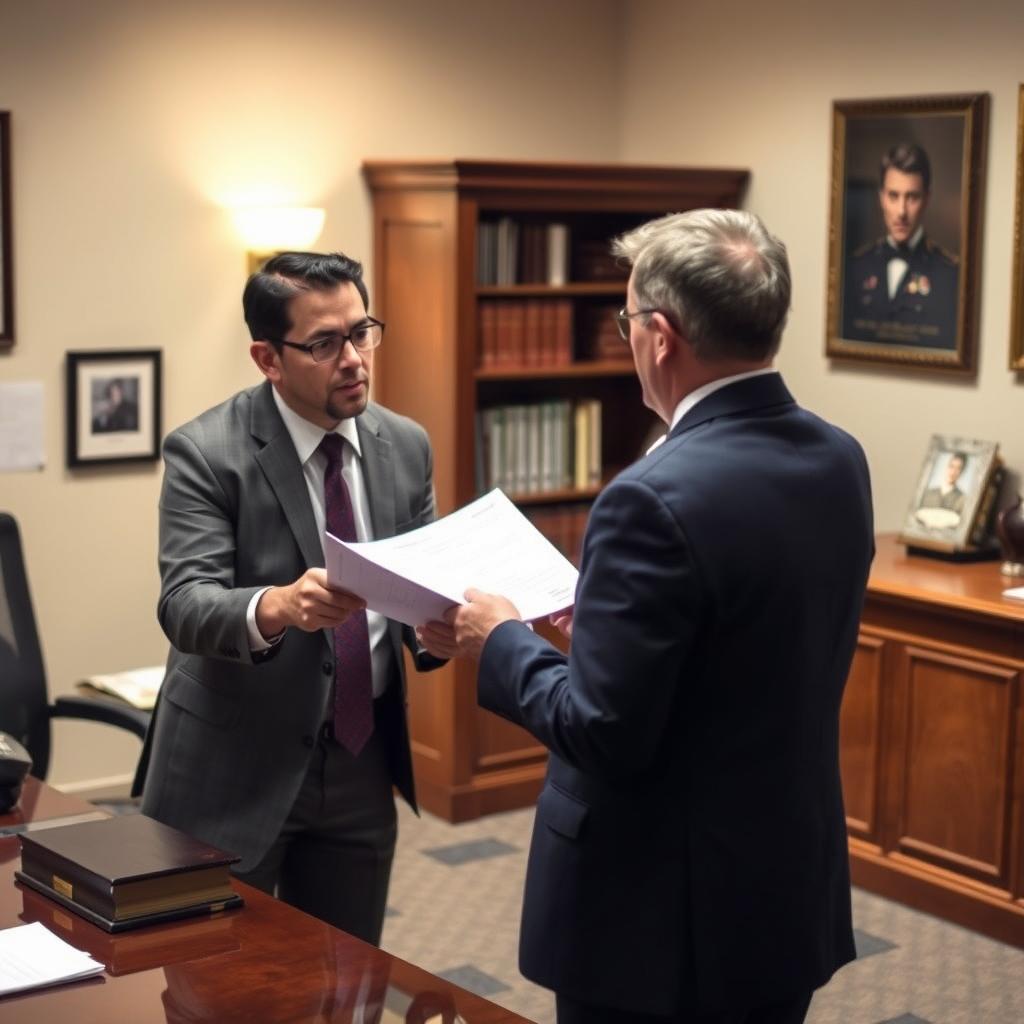
What happens at a federal arraignment in Union County
You received a notice to appear in federal court in Newark. The document mentions an arraignment. You have a crowd of questions: What happens at a federal arraignment? Do I need a lawyer? Will I be taken into custody? If you are facing a federal charge in Union County, understanding the arraignment process is the first step toward protecting your rights. At Law Offices Of SRIS, P.C., Mr. Sris and his Of Counsel team guide clients through every stage of federal criminal proceedings, including arraignments before the U.S. District Court for the District of New Jersey. Reach our New Jersey location at (888) 437-7747 to request a consultation. Law Offices Of SRIS, P.C. – Advocacy Without Borders.
What Is a Federal Arraignment?
A federal arraignment is the court hearing where you are formally informed of the charges against you and asked to enter a plea. It is not a trial; it is a preliminary proceeding governed by the Federal Rules of Criminal Procedure. At the arraignment, the judge reads the indictment—or a summary of it—and addresses your rights, including the right to counsel and the right to remain silent. The court then asks how you plead: guilty, not guilty, or (in limited circumstances) nolo contendere. If you plead not guilty, the case proceeds to pretrial motions and discovery. If you plead guilty, the judge must ensure the plea is knowing and voluntary before accepting it. The arraignment may also include a detention or bail determination if that issue was not resolved at your initial appearance.
In Union County, federal arraignments take place at the U.S. District Court for the District of New Jersey, typically in the Newark division. The U.S. Attorney’s Office for the District of New Jersey prosecutes federal offenses arising from Union County. Federal charges often stem from investigations by agencies such as the FBI, DEA, IRS-Criminal Investigation, or Homeland Security Investigations. The arraignment marks the moment the government’s case becomes an open criminal proceeding, and having experienced counsel at your side from this early stage can shape the trajectory of your defense.
The Federal Arraignment Process Step by Step
A federal case often begins with an initial appearance, which is separate from the arraignment. At the initial appearance, the magistrate judge advises you of the charges, your rights, and the issue of pretrial release. The arraignment follows, usually within a few weeks, though the exact timing depends on the court’s calendar and whether you are in custody. At the arraignment, the judge will read the indictment—or its essential elements—and confirm that you understand the charges. The court will also explain your right to be represented by an attorney, and if you cannot afford one, the court may appoint counsel through the Criminal Justice Act panel or the Federal Public Defender.
Entering a plea is the central act of the arraignment. A not guilty plea preserves your right to contest the government’s evidence at trial. A guilty or nolo contendere plea triggers a detailed colloquy in which the judge questions you to ensure the plea is voluntary and that you understand the rights you are giving up. In many cases, the arraignment sets the schedule for pretrial motions, discovery deadlines, and, if necessary, a trial date. If bail has not yet been set, a detention hearing under the Bail Reform Act may be held immediately after the arraignment to determine whether you will be released pending trial.
How Mr. Sris and His Of Counsel Handle Federal Arraignments
Before you appear in court, Mr. Sris and his Of Counsel review the indictment and the underlying investigation to identify potential weaknesses in the government’s case. They prepare you for exactly what will happen at the arraignment, including the questions the judge will ask and the plea options available. During the hearing, counsel advocates on your behalf—entering your plea, arguing for release on your own recognizance or reasonable bail conditions, and raising any procedural defects that could affect the validity of the charges or the government’s detention request. If a detention hearing is held, Mr. Sris and his Of Counsel present evidence and argument to oppose pretrial detention, emphasizing your ties to the community, lack of flight risk, and any other factors that support release.
Having an attorney involved from the first court appearance ensures that your constitutional rights are protected and that the government’s case is scrutinized from day one. Mr. Sris, a former prosecutor, understands how federal prosecutors build cases and uses that insight to craft strategic responses at the earliest stage of the proceedings.
Frequently Asked Questions
What is the difference between a federal arraignment and an initial appearance?
An initial appearance and an arraignment are distinct steps in federal criminal procedure. The initial appearance occurs shortly after arrest and focuses on advising you of the charges, your rights, and the issue of pretrial release. The arraignment is the hearing where you are formally asked to enter a plea. In federal practice, the two may be combined or separated depending on the court’s schedule, but they serve different procedural purposes. Your attorney will clarify which hearing you are attending and what to expect.
Do I need a lawyer at a federal arraignment in Union County?
You have a right to counsel at every critical stage of a federal criminal prosecution, including the arraignment. Although you may represent yourself, it is strongly advisable to have an experienced federal defense lawyer present. An attorney can advise you on how to plead, argue for release conditions, and begin building a defense from the first court appearance. If you cannot afford counsel, the court will appoint an attorney, but hiring private counsel gives you the advantage of an advocate dedicated solely to your case from the outset.
What happens if I plead not guilty at my arraignment?
If you plead not guilty, the case proceeds to the pretrial phase. The prosecution must disclose evidence through discovery, defense counsel may file motions to suppress evidence or dismiss the indictment, and the court sets deadlines for those motions. The not-guilty plea preserves all your rights to contest the charges at trial. You can change your plea later if a negotiated resolution is reached, but the not-guilty plea is the standard entry when a defense is being prepared.
Can the judge set bail at a federal arraignment?
Yes, bail or conditions of release are often addressed at or immediately after the arraignment. The court conducts a detention hearing under the federal Bail Reform Act to determine whether you present a risk of flight or a danger to the community. The judge may release you on your own recognizance, set bond with conditions, or order pretrial detention. Factors considered include the nature of the offense, your criminal history, ties to the community, and employment. An attorney can present evidence and argue for the least restrictive conditions.
What should I bring to a federal arraignment?
You are not required to bring documents, but you must appear in person on time. Dress appropriately for court—business attire shows respect for the proceeding. If you have retained counsel, coordinate with your lawyer before the hearing. Bring a form of identification for security. Keep in mind that anything you say in court or to law enforcement can be used against you, so avoid discussing the case with anyone except your attorney.
What is the difference between state and federal charges?
Federal charges are prosecuted by the U.S. Attorney’s Office under federal statutes, whereas state charges are handled by local district attorneys under state law. Federal convictions often carry harsher penalties, and there is no parole in the federal system. Federal investigations typically involve agencies like the FBI or DEA and proceed under the Federal Rules of Criminal Procedure. An experienced federal defense attorney is critical to navigate these distinct procedures and sentencing guidelines.
How long does a federal arraignment last?
Arraignment hearings are usually brief—often less than an hour. The length depends on the number of defendants on the calendar, whether a plea is entered, and whether a detention hearing follows. If your case is straightforward and you plead not guilty, the actual arraignment may take only a few minutes. If a contested detention hearing is held the same day, you could be in court for several hours.
Can I speak at my arraignment?
You have the right to speak, but it is generally unwise to do so without your attorney’s guidance. The judge may ask you simple questions to confirm your identity and that you understand the charges. Anything you say beyond those responses could be used against you. Your attorney will handle all substantive statements and arguments on your behalf. If you have questions, direct them to your lawyer, not to the judge or prosecutor.
What if I can’t afford a lawyer for my federal arraignment?
If you cannot afford an attorney, the court will appoint one for you at the arraignment. You must complete a financial affidavit to demonstrate eligibility. The court may appoint a Federal Public Defender or a private attorney from the Criminal Justice Act panel. Keep in mind that appointed counsel often carry heavy caseloads, and retaining private counsel—if possible—may provide more individual case review and resources for your defense.
What happens after the arraignment?
After you enter a plea, the case moves into the pretrial phase. The court will set deadlines for pretrial motions, discovery exchanges, and status conferences. If you are detained, your lawyer may seek to revisit the detention order if circumstances change. If you are released, you must comply with any conditions, such as travel restrictions, reporting requirements, or drug testing. Your attorney will work with you to prepare for the next court dates and to evaluate the government’s evidence.
Does a federal arraignment happen in Union County, New Jersey?
Federal arraignments for offenses arising in Union County take place at the U.S. District Court for the District of New Jersey, typically in the Newark courthouse. Union County is within the Newark vicinage of the federal district. You will not appear in a county courthouse; federal cases are heard in federal buildings. Your attorney will confirm the exact location and courtroom number before your hearing date.
Can I waive my appearance at a federal arraignment?
In some circumstances, a federal court may allow a defendant to waive physical appearance for the arraignment, but it is not automatic. Your attorney can file a motion requesting that you be permitted to appear by consent or through counsel, especially if you are on pretrial release and have no contested issues. The judge has discretion to grant or deny the request. Appearing in person, however, demonstrates respect for the court and ensures there are no misunderstandings about the plea and your obligations.
About Mr. Sris and His Of Counsel Team
Mr. Sris, Owner and Founder of Law Offices Of SRIS, P.C., is a former prosecutor who has focused his practice on complex federal criminal defense since 1997. He is admitted in New Jersey, New York, Virginia, Maryland, and the District of Columbia. Mr. Sris and his Of Counsel bring extensive combined legal experience to every federal matter. Results may vary. When you attend a federal arraignment in Union County with counsel from our firm, you have an advocate who understands both sides of the courtroom and prepares your case from the first court date.
For a complete statutory analysis and a broader look at federal defense strategies, visit our comprehensive federal criminal defense overview. For cases in neighboring counties, our firm also represents clients in Bergen County, Monmouth County, Morris County, and Hunterdon County. To discuss your upcoming arraignment or any federal charge, reach our New Jersey location at (888) 437-7747.
Attorney advertising. Prior results do not guarantee a similar outcome. Attorney responsible for this advertising: Mr. Sris. Results may vary.
Case results depend on a variety of factors unique to each case.